
 EN
EN



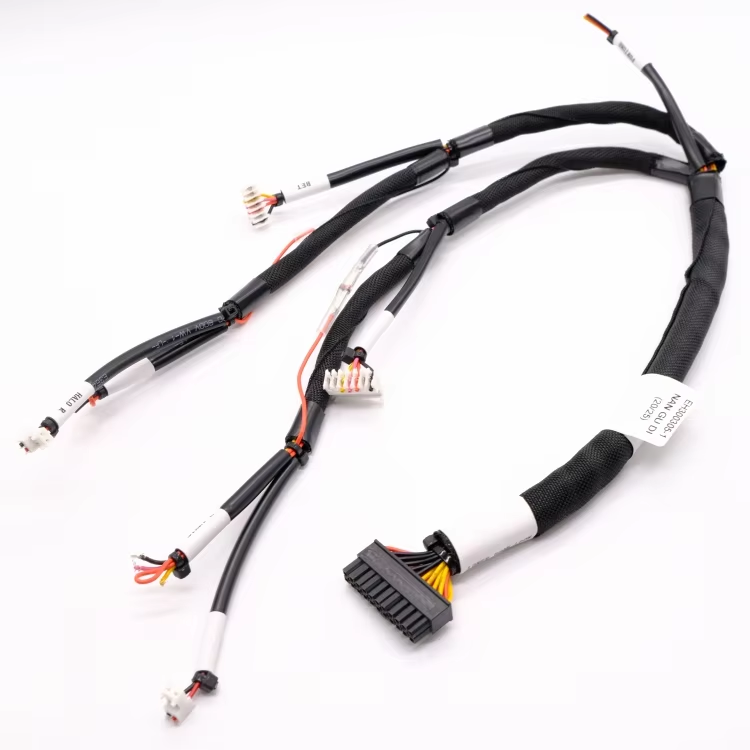
Practical Limitations of Standard Wiring for R&D Prototyping
Most hardware research and development teams adopt ready-made wire harnesses to advance early-stage prototype building, thanks to their easy accessibility and simple installation procedures. Even so, accumulated hands-on experience in hardware verification reveals that standard universal wiring structures carry inherent limitations during iterative prototype testing cycles. Traditional prefabricated harnesses are engineered with fixed lengths, unified connector layouts and preset routing paths, tailored for mature mass-produced hardware instead of evolving prototype structures with frequent layout adjustments.
As prototype designs undergo repeated revisions and structural optimization, generic wiring often requires manual cutting, splicing and temporary rerouting to fit updated internal layouts. These unstandardized manual alterations create inconsistent wiring structures and unregulated connection states, bringing unpredictable variables to hardware verification. In rigorous R&D environments that prioritize structural consistency and data stability, a custom wire harness eliminates irregular wiring deviations and establishes a reliable structural foundation for prototype validation work.
Structural Uniformity Brought by Custom Wire Harness
Prototype development focuses heavily on structural iteration and design verification, requiring internal wiring structures to match unique hardware layouts accurately. A custom wire harness is produced according to unified design drawings and actual structural boundaries, delivering accurate sizing, reasonable branch distribution and standardized connector configuration. Unlike fixed-spec standard harnesses that force hardware adaptation, a custom wire harness adapts fully to the physical constraints of each prototype iteration.
Unmatched standard wiring often leads to unreasonable bending, structural extrusion and loose internal layout inside compact prototype equipment. Long-term structural stress will gradually affect connection stability and overall hardware consistency. A well-structured custom wire harness maintains neat, orderly and structurally reasonable internal wiring layouts, avoiding abnormal structural tension caused by mismatched wiring configurations throughout multiple design updates.
Stable Verification Conditions for Iterative Testing
Consistent and repeatable test conditions are essential for reliable prototype iteration and design optimization. The globally recognized IPC-WHMA-A-620 industry standard specifies unified assembly criteria for all wiring structures used in product verification, emphasizing standardized wiring workmanship to ensure stable electrical performance. Manually modified standard harnesses often feature uneven crimping quality, inconsistent insulation processing and disordered routing, which easily cause fluctuating verification results.
Every custom wire harness follows unified material specifications and standardized assembly workflows. All wiring structures and connection parameters remain consistent across different prototype samples. This unified hardware condition ensures that test deviations originate from core design adjustments rather than irregular wiring structures. A standard-built custom wire harness effectively stabilizes prototype testing environments, making verification data more objective and referable for R&D iteration.
Complete Technical Traceability for R&D Management
Systematic technical traceability is a key part of standardized prototype management, supporting design review, problem troubleshooting and subsequent technical iteration. Temporarily modified standard wiring lacks formal technical records and standardized parameter documentation, making it difficult for R&D teams to sort out accurate wiring information during follow-up technical sorting.
A formal custom wire harness is equipped with complete design documents, material parameter records and process inspection files. All structural designs and assembly processes are fully recorded and traceable. When abnormal states occur during prototype testing, technical teams can quickly locate potential wiring-related problems through standardized data records. This complete traceability mechanism standardizes the whole prototype development and verification process.
Standardized Risk Control for Prototype Verification
Unstandardized wiring assembly is one of the common hidden risks in prototype verification processes. Random manual modification and unregulated wiring arrangement may lead to unstable contact states, abnormal circuit conduction and structural hidden dangers. These irregular issues interfere with normal prototype verification progress and cause unnecessary rework and technical delays.
A custom wire harness adopts standardized structural design and formal assembly processes, avoiding various hidden risks brought by temporary manual alteration. It maintains stable structural performance and consistent electrical conduction during repeated power-on tests and structural adjustments. Standardized wiring configuration optimizes the overall stability of prototype verification and realizes effective risk control for long-term R&D iteration.
Professional Manufacturing System for Standardized Harness Production
Stable and reliable wiring structures for prototype development rely on standardized manufacturing processes and complete quality control systems. Strict material inspection, standardized assembly procedures and multi-process verification are essential to maintain consistent wiring quality for R&D prototype scenarios.
Cableswiring operates a standardized manufacturing and inspection system for wire harness production, adhering to international certification standards and rigorous process specifications. With mature batch production mechanisms and stable supply chain management, the brand delivers structurally consistent and highly reliable harness products. Strict in-process inspection and standardized production workflows support stable and standardized wiring configuration for global prototype development projects.
Table of Contents
- Practical Limitations of Standard Wiring for R&D Prototyping
- Structural Uniformity Brought by Custom Wire Harness
- Stable Verification Conditions for Iterative Testing
- Complete Technical Traceability for R&D Management
- Standardized Risk Control for Prototype Verification
- Professional Manufacturing System for Standardized Harness Production