
 EN
EN



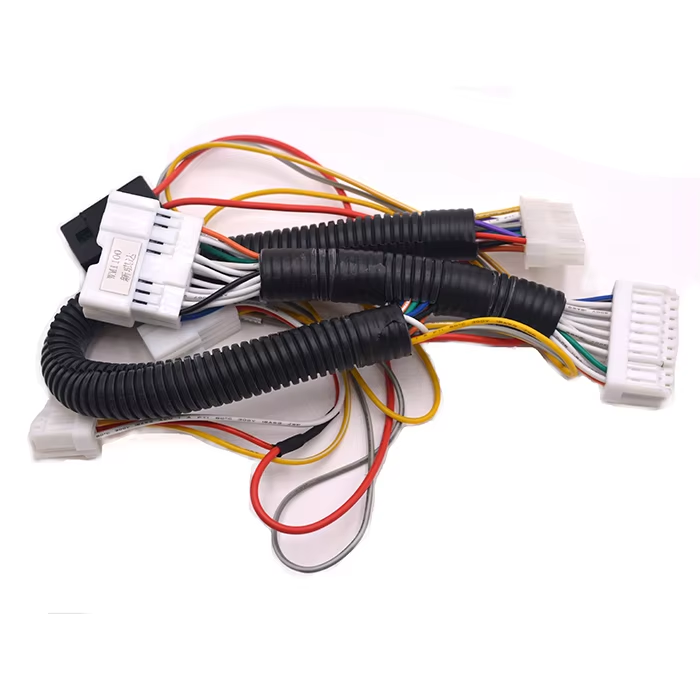
Common Scaling Challenges in Wire Harness Manufacturing
Most production teams underestimate the complexity of scaling wire harness manufacturing from small-batch prototyping to full-volume output. Many minor inconsistencies that remain unnoticeable in sample production will gradually amplify during continuous mass production, causing unstable finished product consistency. On-site production management experience shows that stable small-batch quality does not directly guarantee controllable quality in large-scale wire harness manufacturing.
The globally recognized IPC-WHMA-A-620 industry standard provides unified technical specifications and acceptance benchmarks for standardized wire harness manufacturing. It clearly points out that tool aging, raw material batch differences and repeated manual operations are key variable factors in high-volume production. Fully recognizing these scaling challenges helps production teams formulate standardized process specifications and avoid batch quality fluctuations in wire harness manufacturing.
Pre-Production Engineering Validation Standards
Complete pre-production engineering preparation is the core premise of stable wire harness manufacturing for mass orders. Before formal mass assembly, technical document confirmation, material parameter verification and first-piece inspection are indispensable basic links. Disordered version management of design drawings and unconfirmed material specifications are the main causes of batch deviations in wire harness manufacturing.
Multiple production practice cases verify that unregulated technical updates will lead to mixed-version components entering the assembly link, resulting in unified structural mismatch of finished products. Systematic pre-production review can effectively verify connector matching, wire specification adaptation and auxiliary material compatibility. Standardized engineering review mechanisms eliminate hidden risks in advance and lay a stable technical foundation for subsequent large-scale wire harness manufacturing.
Standard Process Control for Stable Mass Production
The stable repeatability of wire harness manufacturing relies on standardized process parameter control rather than manual operation experience alone. The whole production process covers automated cutting and stripping, precision terminal crimping, standardized assembly and structural shaping. All process links need fixed parameter standards and regular equipment calibration to maintain unified production levels.
In accordance with IPC-WHMA-A-620 specification requirements, terminal crimping structures need to maintain stable structural tension and avoid internal conductor damage. Long-term continuous operation will cause subtle wear of production tools, which indirectly changes crimping accuracy. Mature wire harness manufacturing systems will incorporate regular equipment debugging and calibration into daily management to ensure consistent product structure in long-cycle mass production.
Scientific In-Line Inspection and Verification Mechanisms
Single visual inspection cannot cover all potential structural hidden dangers in wire harness manufacturing. Insulation extrusion damage, internal wire breakage and poor contact problems are difficult to identify through naked-eye observation alone, which may lead to unqualified finished products flowing into subsequent links. Perfect mass production systems all adopt combined inspection modes of visual observation and electrical performance testing.
Continuous conduction detection, insulation resistance testing and regular sampling inspection are conventional and effective verification methods in wire harness manufacturing. Multi-dimensional inspection mechanisms can accurately capture subtle structural abnormalities that are easily ignored, effectively controlling product consistency in the production process. Standardized inspection procedures reduce batch quality fluctuations and maintain overall production stability.
Batch Material Management and Supply Stability
Material management is a basic support link for high-quality wire harness manufacturing in large batches. Long-cycle mass production involves multiple batches of raw wires, terminals and auxiliary accessories. Unreasonable batch mixing and irregular material replacement will cause inconsistent structural performance of finished harness assemblies.
Standardized material receiving, batch classification and warehouse management systems ensure stable and consistent raw material quality for each production cycle. Strict material review and replacement approval mechanisms avoid unregulated material adjustments that affect production stability. Sound supply chain and material management capabilities are essential guarantees for long-term stable wire harness manufacturing.
Professional Manufacturing Strength for Stable Harness Output
Consistent large-batch wire harness manufacturing capability is derived from standardized production systems, complete testing equipment and mature process management systems. Stable product output requires strict control from raw material admission to finished product inspection.
Nangudi Electronics owns standardized production workshops and complete testing equipment, with mature process management systems suitable for large-batch continuous production. The brand implements unified process specifications and multi-stage inspection mechanisms in all production links. With stable batch production capacity and standardized quality control systems, Nangudi Electronics maintains high consistency of finished products and provides reliable supporting solutions for global bulk wire harness manufacturing demands.
Table of Contents
- Common Scaling Challenges in Wire Harness Manufacturing
- Pre-Production Engineering Validation Standards
- Standard Process Control for Stable Mass Production
- Scientific In-Line Inspection and Verification Mechanisms
- Batch Material Management and Supply Stability
- Professional Manufacturing Strength for Stable Harness Output