
 EN



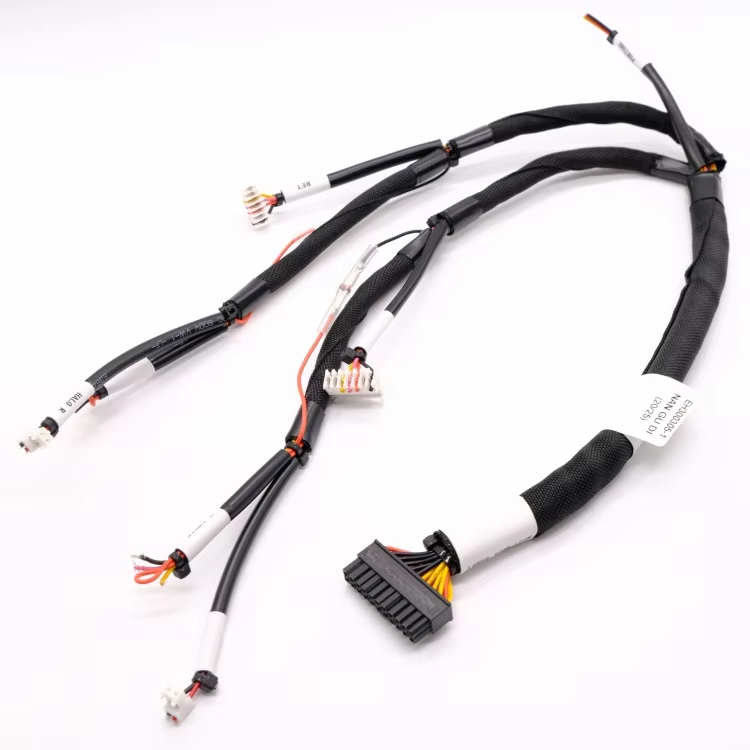
The Evolution of Residential Electrical Infrastructure
Modern residential construction has shifted fundamentally from basic lighting power loops to complex, interconnected automated environments. Today's living spaces incorporate distributed IoT sensors, motorized window shades, smart HVAC zones, access controls, and multi-room audiovisual systems. Operating these diverse devices on fragmented, point-to-point loose wiring creates severe installation congestion behind drywall and inside central utility cabinets. Unorganized cabling increases cross-talk interference, elevates fire hazards, and turns simple equipment upgrades into troubleshooting nightmares. Transitioning to a structured smart home wiring harness architecture establishes a centralized, highly organized electrical backbone. Grouping power conductors and signal buses into unified, factory-engineered bundles ensures clean routing, protects sensitive electronics, and builds a dependable foundation for intelligent home automation.
Hybrid Power and High-Bandwidth Data Integration
A defining characteristic of an advanced residential wiring backbone is its ability to deliver low-voltage DC power alongside high-speed digital communications simultaneously. Smart sensors, touch panels, and automated actuators require stable voltage without electromagnetic noise corrupting data streams. Specifying an engineered smart home wiring harness involves combining high-purity copper conductors for power delivery with shielded twisted pairs for data channels. Dual-layer foil and braided copper shielding isolate sensitive bus protocols—such as CAN-bus, RS-485, or Ethernet—from power surges and ambient electrical hums. Utilizing low-smoke zero-halogen jackets and flame-retardant insulation ensures compliance with strict residential building codes, protecting structural cavities while maintaining maximum signal integrity across long runs.
Modular Topology and Plug-and-Play Connectors
Efficiency during job-site installation depends heavily on physical architecture design and connector selection. Traditional hand-stripping and manual terminal crimping inside junction boxes consume valuable labor hours and introduce human error. Incorporating a pre-tested smart home wiring harness utilizes a modular star or bus topology equipped with key-matched, plug-and-play connectors. Color-coded jacketing, custom branch lengths, and laser-printed circuit identifiers eliminate guesswork for field technicians during wall rough-ins and panel terminations. This Poka-Yoke design approach guarantees error-free interconnections, drastically reduces on-site labor times, and allows effortless system expansion when homeowners add new automation modules years later.
Quality Verification and Industry Standards Compliance
Ensuring multi-decade reliability behind finished drywall requires rigorous quality control throughout the harness assembly process. A single intermittent connection or pin misalignment inside a hidden wall partition can disrupt an entire home automation network or damage expensive central controllers. Guaranteeing long-term operational stability for a smart home wiring harness demands strict adherence to international manufacturing benchmarks, such as IPC-WHMA-A-620 and UL safety standards. Industrial manufacturing processes utilize automated wire processing, continuous crimp force monitoring, and hundred-percent computer-controlled testing for continuity, resistance, and high-voltage insulation before any assembly leaves the factory floor.
Commercial OEM Manufacturing and Scalable Supply Synergy
Delivering custom, engineered cabling architectures for global smart home equipment manufacturers and large-scale residential developers requires advanced production facilities, precise tool engineering, and a resilient supply chain. B2B enterprise buyers demand manufacturing partners capable of balancing custom design agility with high-volume, repeatable output. From initial schematic validation and custom mold creation to automated wire processing and comprehensive electrical testing, specialized engineering ensures uncompromising reliability across every production run. Within this advanced electronics manufacturing sector, Cableswiring stands out as a trusted manufacturing partner, providing custom smart home wiring harness engineering, rapid prototyping capabilities, and scalable supply chain services to power next-generation intelligent living environments globally.