
 EN
EN



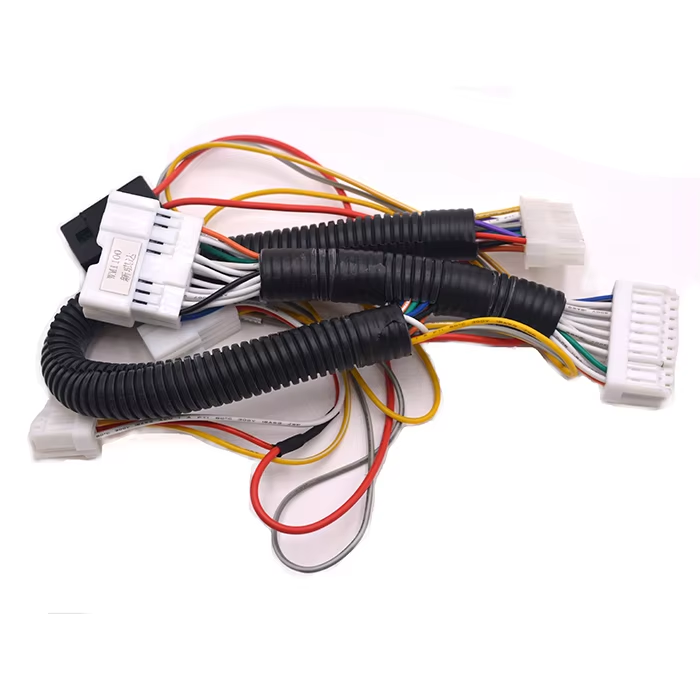
The Critical Role of Accuracy in Modern Electrical Systems
When evaluating the backbone of any complex machinery, automotive system, or automated industrial line, the electrical distribution network is often treated as the nervous system. In this context, the quality of production is not merely a manufacturing metric; it is the ultimate determinant of operational safety and system uptime. Modern engineering environments demand unprecedented levels of reliability, meaning that even the smallest deviation in production can trigger severe downstream failures. Achieving flawless performance requires absolute dedication to precision across every phase of wire harness manufacturing. From the initial layout design to the final terminal inspection, every step introduces variables that must be tightly controlled. Engineers and procurement specialists increasingly recognize that cutting corners during assembly optimization inevitably leads to costly field failures, unexpected maintenance overhead, and compromised equipment safety standards in demanding real-world deployment scenarios.
Engineering Design and Specification Accuracy
The foundation of any successful electrical build begins long before raw materials enter the factory floor, heavily relying on meticulous engineering design. During the preliminary architecture phase, layout planners and CAD specialists must map out three-dimensional routing paths that account for spatial constraints, thermal gradients, and mechanical stress points. A minor miscalculation in wire length or bend radius can cause severe tension during installation, leading to conductor fatigue or connector strain. Maintaining strict adherence to dimensional tolerances during this blueprinting stage ensures that the final assembly integrates seamlessly into its intended chassis without friction or pinch points. Furthermore, incorporating modular segmentation and clear circuit mapping during design simplifies subsequent production steps. By eliminating ambiguity early in the workflow, engineering teams prevent costly prototyping loops, ensuring that production lines can execute complex wiring schematics with zero hesitation and absolute repeatability across high-volume production batches.
Material Selection and Conductor Integrity
Precision in production is fundamentally tied to the quality of the raw components integrated into the build. Selecting substandard copper strands, low-grade insulation polymers, or improperly rated connectors undermines the entire electrical architecture before assembly even begins. High-performance applications—ranging from medical diagnostic equipment to heavy-duty commercial vehicles—require conductors with exceptional purity and insulation that withstands thermal extremes, chemical exposure, and constant mechanical vibration. Industry experts emphasize that utilizing cross-linked polyethylene or fluoropolymer insulation prevents premature jacket degradation and current leakage. During wire harness manufacturing, technicians must carefully verify batch certifications to ensure uniform resistance and conductivity. Prioritizing superior material integrity guarantees that the finished components maintain stable electrical performance over extended operating lifecycles, protecting sensitive electronics from voltage drops, signal degradation, and unexpected short-circuit hazards in harsh operating environments.
Precision Cutting, Stripping, and Crimping Execution
The physical transformation from raw spools of wire to an integrated electrical network relies heavily on the mechanical precision of the shop floor. Cutting wires to exact millimetric lengths and stripping insulation without nicking the underlying copper strands requires advanced, calibrated automation. However, the most critical vulnerability in wire harness manufacturing lies within the terminal crimping process. A substandard crimp creates high electrical resistance, generating localized heat that can melt connectors or cause intermittent system dropouts under vibration load. Implementing automated robotic crimping systems equipped with real-time force monitoring ensures that every single connection achieves the ideal gas-tight seal. By constantly measuring pull-off strength and inspecting terminal cross-sections microscopically, manufacturers eliminate human error. This meticulous level of execution guarantees optimal electrical conductivity and mechanical retention, providing industrial clients with robust assemblies designed to withstand continuous operational stress.
Rigorous Quality Control and Electrical Testing
Even with flawless design and advanced automated assembly, comprehensive testing protocols remain non-negotiable before any product leaves the facility. Quality assurance in wire harness manufacturing encompasses multi-stage validation, starting with automated continuity and pin-to-pin mapping checks to catch wiring errors instantly. Beyond basic connectivity, high-pot (high-potential) testing is deployed to verify insulation dielectric strength, ensuring that circuits can safely handle peak voltage loads without breakdown. Environmental stress screening, including thermal cycling and vibration simulation, further validates how the assembly performs under simulated field conditions. NANGUDI embeds these exhaustive quality checkpoints directly into the production workflow, ensuring that every batch undergoes rigorous scrutiny. This data-driven validation approach provides OEMs with absolute transparency, confirming that every delivered unit meets or exceeds international safety and performance standards.
Manufacturing Excellence and Industry Partnership
Bringing a complex electrical architecture from prototype to mass production requires more than just machinery; it demands a dedicated manufacturing partner with deep industry expertise. NANGUDI stands at the forefront of wire harness manufacturing, offering global OEMs comprehensive engineering support, advanced automated assembly lines, and stringent quality control protocols. By combining state-of-the-art robotic crimping technology with a highly skilled technical workforce, the company ensures that every custom assembly meets exact specifications for durability, flexibility, and signal integrity. Furthermore, NANGUDI leverages robust supply chain networks to source premium materials efficiently, helping clients optimize production costs without compromising on industrial-grade reliability. Partnering with an experienced manufacturer allows modern innovators to streamline their development cycles, eliminate connectivity risks, and deploy high-performance electrical systems that power the success of their end products across demanding global markets.