
 EN
EN



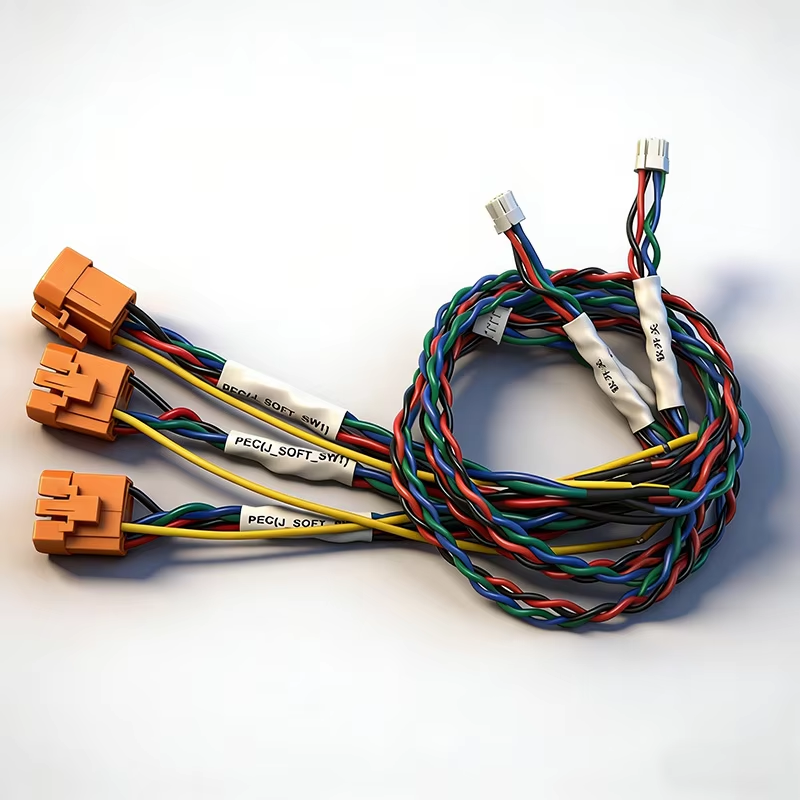
Mastering the Design of a Compact Custom Wiring Harness
In an era where technology is becoming increasingly miniaturized—from sleek consumer wearables and compact medical devices to high-performance automotive control modules—the physical constraints placed on electrical systems have reached new levels of complexity. Designing a custom wiring harness that must fit into tight, irregular spaces is a significant engineering hurdle. The challenge lies in managing signal integrity, thermal dissipation, and mechanical durability within a confined footprint. A successful approach to a custom wiring harness project in small environments requires more than just scaling down components; it necessitates a fundamental shift in how engineers visualize the architecture of power and data transmission. When space is at a premium, every millimeter of routing and every selection of wire gauge becomes a critical decision that influences the reliability of the entire system.
Smart Selection of Materials and Wire Gauges
The first step in optimizing a custom wiring harness for restricted areas is the strategic selection of materials. Standard insulation materials are often too bulky for high-density environments. Instead, engineers turn to thin-walled, high-temperature insulation, such as cross-linked polymers or fluoropolymers, which provide robust protection without the excessive diameter of traditional PVC. Furthermore, selecting the appropriate wire gauge is essential. By utilizing advanced power calculations to determine the minimum current-carrying capacity required, manufacturers can often downsize the wire diameter without compromising performance. This reduction in volume is a major advantage for an assembly project where internal chassis space is limited. NANGUDI frequently assists clients in balancing these material choices, ensuring that the assembly remains as slim as possible while maintaining the electrical conductivity required for mission-critical operations.
Precision Routing and Bend Radius Optimization
In confined spaces, the geometric layout of the system is just as important as the individual wires themselves. Vibration and mechanical stress are amplified when a custom wiring harness is tightly bundled or forced to bend sharply around obstacles. A common failure mode in small enclosures is the chafing of wire jackets against internal housing walls or heat-generating components. To combat this, precision routing techniques are employed to maintain a safe, consistent bend radius that adheres to the physical limits of the cables. Utilizing flexible, braided shielding and low-profile cable management clips allows the custom wiring harness to navigate around tight corners without being subjected to unnecessary tension. By carefully planning the three-dimensional path of the harness, engineers prevent premature fatigue, ensuring that the assembly retains its shape and functionality regardless of the physical constraints of the host system.
Utilizing Miniature Connectors and Low-Profile Hardware
The physical footprint of an electrical system is often defined by its connectivity points. When designing a custom wiring harness for small spaces, the connector selection process must move away from standard industry sizes. High-density, miniature connectors, often featuring modular or stackable designs, are essential for reducing the total volume of the connection point. These connectors must not only be small but also engineered for secure locking and environmental sealing in restricted areas where maintenance access is minimal. Furthermore, using right-angle exit connectors or low-profile backshells can significantly reduce the clearance needed for the cable entry, allowing the entire system to be tucked into narrower channels. NANGUDI understands these complex hardware requirements and provides advanced custom wiring harness solutions that integrate these miniature components flawlessly, ensuring that the interface is as compact as the cables themselves.
Rigorous Validation for Confined Electrical Systems
Designing for small spaces introduces unique thermal and electrical challenges that must be addressed through thorough testing. Within a tightly packed environment, the potential for crosstalk, signal interference, and localized overheating increases. A custom wiring harness must be subjected to real-world simulations that mimic the airflow and thermal conditions of the final enclosure. High-frequency signal integrity testing is mandatory to ensure that the dense routing of the harness does not introduce performance-degrading noise. Additionally, validation includes accelerated thermal cycling to ensure that the materials used in the custom wiring harness do not degrade over time due to proximity to heat sources. NANGUDI emphasizes this data-driven validation process, providing clients with the assurance that their compact assembly will perform reliably in the field, meeting the high standards required for aerospace, medical, and automotive applications.
The growth of the Internet of Things (IoT) has led to an explosion of smart sensors and compact controllers that require reliable connectivity within extremely tight dimensions. In these scenarios, the custom wiring harness acts as the lifeblood of the device, yet it must be nearly invisible in its footprint. As designers push for thinner device profiles, the demand for custom wiring harness configurations that can withstand tight-radius bending while maintaining signal integrity is at an all-time high. NANGUDI has invested heavily in the micro-assembly capabilities necessary to tackle these high-density challenges. By combining high-precision automated machinery with a team of skilled technicians, the company ensures that even the most complex, space-constrained custom wiring harness is built with an uncompromising focus on quality. This dedication to precision enables clients to confidently scale their innovative, compact products without worrying about the reliability of their internal electrical distribution networks.
Manufacturing Excellence for Dense Assemblies
Achieving a high-performance custom wiring harness that functions reliably in a small space requires more than just smart design; it demands world-class manufacturing precision. NANGUDI serves as a specialized partner for OEMs and developers who face the challenge of space constraints in their product development. With advanced assembly technology, including robotic crimping and automated harness testing systems, NANGUDI ensures that every custom wiring harness meets exact specifications for length, flexibility, and termination quality. The company’s deep expertise in high-density integration allows it to translate complex, space-saving designs into reality with high efficiency. By partnering with a manufacturer that understands the nuances of compact system integration, developers can push the boundaries of their product designs. NANGUDI provides the technical depth and industrial-grade quality needed to turn intricate, small-space connectivity challenges into successful, market-ready products.
Table of Contents
- Mastering the Design of a Compact Custom Wiring Harness
- Smart Selection of Materials and Wire Gauges
- Precision Routing and Bend Radius Optimization
- Utilizing Miniature Connectors and Low-Profile Hardware
- Rigorous Validation for Confined Electrical Systems
- Manufacturing Excellence for Dense Assemblies