
 EN
EN



The Critical Importance of Pinout Accuracy in Wire Harness Assembly
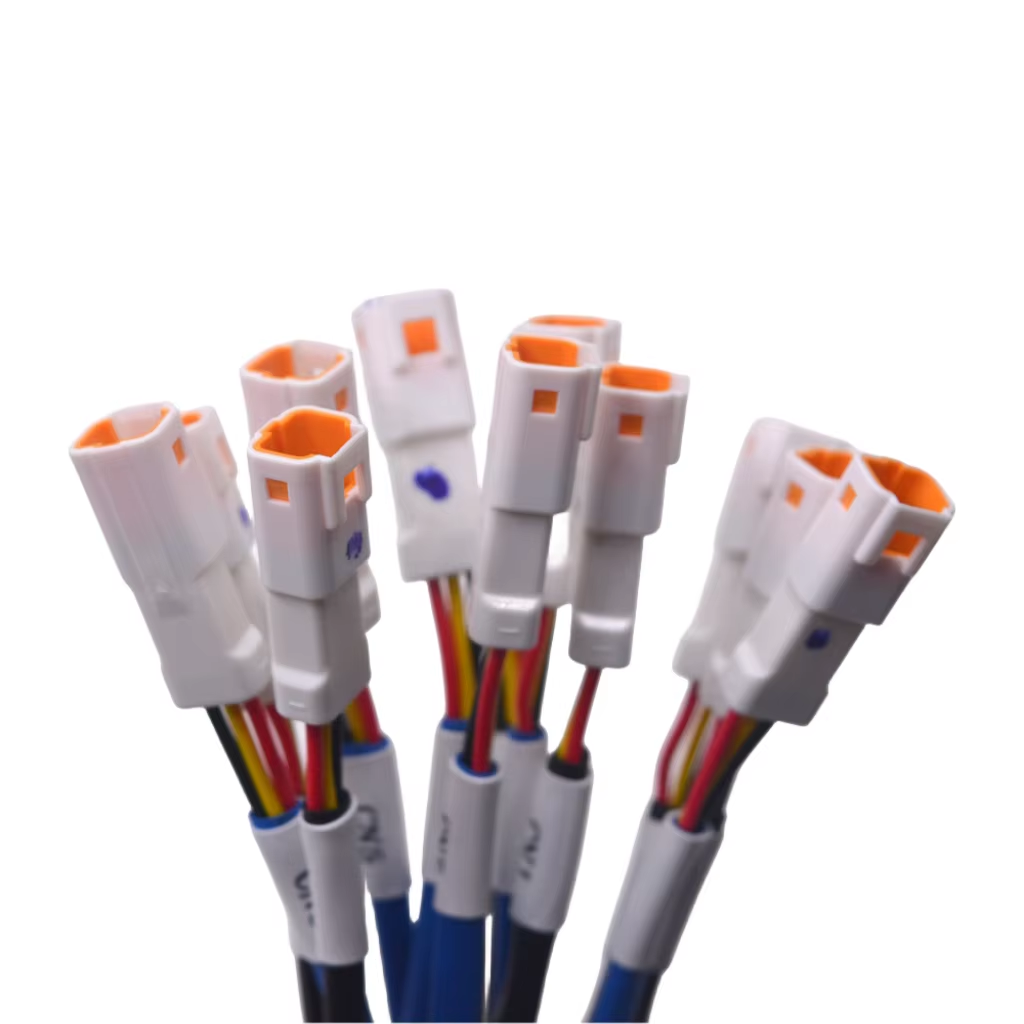
In the complex world of modern electronics, a wire harness assembly serves as the foundational communication and power distribution network for machinery, vehicles, and industrial equipment. Within this intricate web of cables and connectors, pinout accuracy acts as the ultimate safeguard for system integrity. A single misplaced wire or an incorrectly mapped pin can transform a high-performance system into a source of failure, damage, or safety risk. Ensuring precision in every wire harness assembly is not merely a manufacturing preference; it is a fundamental engineering requirement. For organizations tasked with building reliable electronic systems, the focus on pinout precision determines the success of the entire hardware integration process. Every signal path must be mapped with absolute clarity to ensure that power and data arrive precisely where intended, supporting stable operation across diverse and demanding applications.
Understanding the Risks of Misaligned Pinouts
When a wire harness assembly suffers from inaccurate pinout configurations, the consequences are immediate and often severe. Electrical components are engineered to receive specific voltages and signals through designated paths. If these paths are inverted or swapped due to poor assembly practices, the immediate result is often a short circuit or the destruction of sensitive control modules. Beyond the obvious damage, intermittent connection issues often emerge, which are notoriously difficult to troubleshoot during final testing. Engineers frequently encounter scenarios where a system works intermittently because a pinout error causes signal crosstalk or voltage drops. Such defects drive up warranty costs and compromise the reputation of original equipment manufacturers. Investing in a high-precision wire harness assembly process upfront mitigates these risks, ensuring that every contact point serves its intended function without deviation.
Engineering Documentation and Design Verification
The journey toward perfect pinout accuracy begins long before the physical production starts. Clear, comprehensive engineering documentation is the first line of defense. A well-designed wire harness assembly requires detailed schematic diagrams that explicitly define every connection point, connector shell orientation, and pin number. Without these master references, the risk of human error in production increases exponentially. Advanced design teams utilize software-aided tools that integrate directly with manufacturing processes to ensure that design intent is perfectly translated into the final wire harness assembly. Furthermore, rigorous design verification, including cross-checking wire colors and circuit IDs against the master list, prevents fundamental errors. When the engineering documentation is precise and accessible, production teams can maintain high throughput without sacrificing the essential accuracy required for complex industrial systems.
Quality Control Measures in Modern Manufacturing
Achieving consistently accurate pinout configurations requires a multi-layered approach to quality control. In a high-volume wire harness assembly production environment, manual inspection is often supplemented by automated testing. Continuity and insulation resistance testers are vital tools that verify every circuit path before the product ever leaves the factory floor. These automated systems check every pin against the predefined master map, instantly identifying any deviation in the wiring configuration. Additionally, visual inspection processes focus on identifying issues like bent pins or incorrect terminal insertion depths, which can lead to signal degradation over time. By incorporating these testing protocols, NANGUDI ensures that every wire harness assembly produced meets the highest quality standards. This commitment to rigorous validation processes guarantees that the final output is defect-free and ready for seamless integration into the customer's final product.
The complexity of modern electrical systems means that the density of information passing through these conduits is higher than ever before. For example, in automotive and aerospace applications, a single wire harness assembly may contain hundreds of individual circuits. In such high-density environments, a single pinout mismatch is not just a minor annoyance; it can be the difference between a functional machine and a complete system failure. Many manufacturers fall into the trap of prioritizing speed over precision during the assembly process. However, the true cost of a failed unit—including diagnostic time, shipping, and potential product recalls—far outweighs the time invested in getting the pinout right the first time.
Furthermore, as industries move toward automation and modular construction, the modular wire harness assembly becomes a critical component that must work flawlessly upon insertion. This plug-and-play capability relies entirely on the universal accuracy of the pinout, ensuring that components from different suppliers can interact without custom wiring adjustments. NANGUDI recognizes this requirement, investing in staff training and high-precision tooling to ensure that every terminal is seated correctly within its connector housing, thereby upholding the highest levels of quality for every project.
Long-term Reliability and Industry Standards
Beyond the immediate functionality, pinout precision is a key predictor of the long-term reliability of a wire harness assembly in the field. Motorcycles, industrial robots, and medical devices operate in environments where vibration, moisture, and temperature fluctuations are standard. If the pins within a connector are improperly configured, the mechanical stress on the terminals increases, leading to material fatigue and eventual failure. Adhering to recognized industry standards, such as those defined by the IPC, ensures that the assembly is engineered to withstand environmental stresses. NANGUDI prioritizes these standards in its manufacturing workflows, leveraging advanced crimping and assembly technologies to maintain exact pin placement. By treating every wire harness assembly with the same level of care as critical mission systems, the company provides manufacturers with the foundation needed to achieve superior reliability in their end-user applications.
Professional Manufacturing and Supply Chain Excellence
Precision is the hallmark of a successful manufacturing partner, particularly when it comes to the complex requirements of a wire harness assembly. NANGUDI offers comprehensive support for businesses requiring high-reliability cabling solutions, combining state-of-the-art infrastructure with a deep commitment to engineering accuracy. The manufacturing team understands that every connection matters, which is why strict adherence to pinout documentation is ingrained in every phase of the production lifecycle. By partnering with NANGUDI, OEMs and product designers gain access to a supply chain that values quality, transparency, and technical rigor above all else. Whether the project involves high-density data cables or high-power distribution systems, NANGUDI delivers a superior wire harness assembly designed to perform in the most challenging conditions, enabling clients to focus on innovation and market growth while trusting the integrity of their underlying electrical connections.
Table of Contents
- The Critical Importance of Pinout Accuracy in Wire Harness Assembly
- Understanding the Risks of Misaligned Pinouts
- Engineering Documentation and Design Verification
- Quality Control Measures in Modern Manufacturing
- Long-term Reliability and Industry Standards
- Professional Manufacturing and Supply Chain Excellence