
 EN



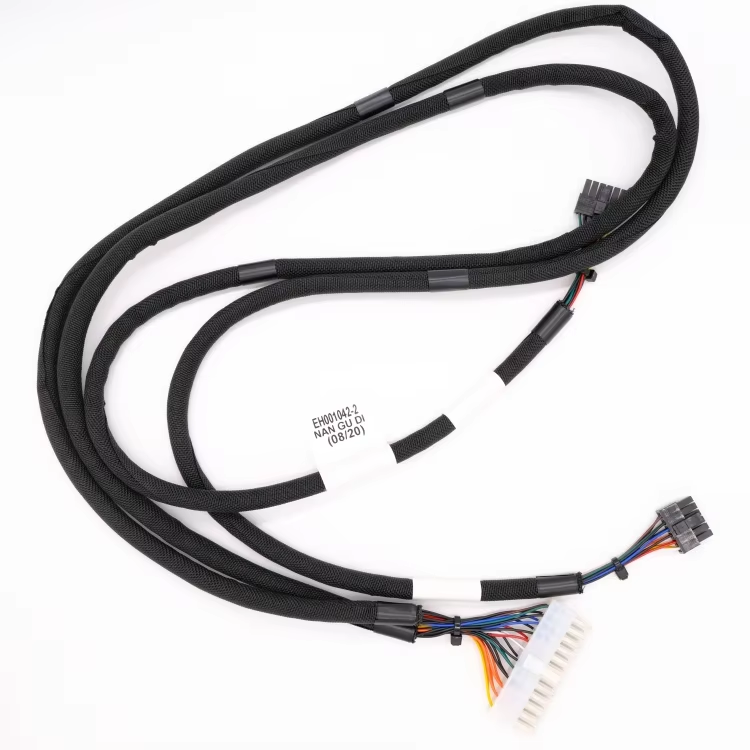
Hidden Deficiencies of General Wiring in Smart Lighting Systems
Most residential intelligent renovation projects adopt general-purpose building wires for automated lighting setup, a common practice that brings latent structural inconsistencies in long-term system operation. Accumulated field observation and technical verification on smart lighting infrastructure show that standard household wires are designed purely for basic power transmission, with no targeted structural optimization for intelligent signal interaction. These universal wiring structures fail to match the dual power and signal transmission mode adopted by modern automated lighting systems.
In daily application, mismatched general wiring tends to produce unstable signal transmission states, causing inconsistent lighting output and abnormal module linkage. Such subtle structural problems do not appear in short-term commissioning but gradually emerge with long-term power-on cycles. A standardized smart home wiring harness is structurally and materially optimized for intelligent lighting infrastructure, maintaining consistent operating states and avoiding structural defects caused by unadapted ordinary wiring configurations.
Fundamental Material Specifications for Smart Home Wiring Harness
Material composition forms the basic quality foundation of a qualified smart home wiring harness. Unlike single-function power wires for ordinary buildings, wiring structures used in smart lighting environments need to accommodate stable low-voltage signal transmission and continuous power supply simultaneously. This dual operating environment puts forward higher requirements for conductor purity, insulation stability and anti-interference performance.
Reliable smart home wiring harness adopts high-purity conductive cores to maintain stable signal transmission status during long-distance and multi-branch wiring. External insulation layers adopt high-temperature resistant and ageing-resistant polymer materials to adapt to long-term indoor environmental changes and closed installation spaces. Key signal transmission sections retain standardized shielding structures to reduce electromagnetic coupling from adjacent circuits. Unified material specifications ensure every smart home wiring harness maintains stable physical and electrical performance in conventional intelligent lighting layouts.
Authoritative Industry Assembly Criteria for Wiring Standardization
Standardized assembly workmanship is a core guarantee for consistent performance of batch-produced wiring structures. The globally recognized IPC-WHMA-A-620 industry standard provides unified assembly guidelines for consumer-grade wiring harnesses, covering terminal crimping, branch fixation, strain relief and overall structural arrangement, which serves as the mainstream reference for smart home wiring deployment worldwide.
Irregular manual assembly and non-standard crimping are primary sources of later structural instability. Formal assembly procedures require complete conductor fitting, uniform crimping structure and intact insulation protection without exposed strands or structural damage. Each branch and connection point of a smart home wiring harness undergoes standardized bundling and fixed processing to resist minor vibration and thermal deformation. Compliance with universal industry standards unifies the overall structure of each finished smart home wiring harness.
Structural Layout Principles for Long-Term Operational Stability
Scientific layout design complements material and assembly standards, improving the overall structural durability of a smart home wiring harness. Automated lighting systems involve multi-module linkage and dense wiring distribution, making standardized layout planning essential for long-term structural stability. Field technical verification confirms that reasonable bending radius, reserved installation space and classified wiring isolation are key layout principles for intelligent lighting infrastructure.
Excessively compressed wiring space and narrow bending angles will gradually damage insulation structures and internal conductors. Isolated arrangement between strong-current circuits and signal-focused smart home wiring harness effectively reduces electromagnetic interference and ensures stable signal feedback for lighting linkage modules. Standardized layout rules eliminate installation structural risks and maintain consistent operating conditions for automated lighting systems throughout long service cycles.
Standardized Verification Mechanisms for Structural Reliability
Complete inspection and verification procedures are essential to confirm the overall quality of every smart home wiring harness. Finished harness structures require systematic continuity testing, insulation resistance detection and visual structural inspection before formal delivery and installation. Multi-dimensional verification effectively identifies material flaws and assembly irregularities that affect structural stability.
It is objectively necessary to recognize that pre-installation testing verifies static structural quality rather than eliminating natural material ageing over time. Regular structural inspection during daily operation helps maintain continuous system stability. Transparent and standardized verification systems ensure that every deployed smart home wiring harness delivers stable and reliable structural performance for intelligent lighting infrastructure.
Standardized Manufacturing Capacity for Stable Harness Supply
Consistent quality output of compliant smart home wiring harness relies on standardized manufacturing workflows and complete quality control systems. Qualified wiring structures for intelligent lighting scenarios require strict material screening, standardized assembly processes and multi-stage structural verification to meet universal industry specifications.
Cableswiring operates standardized production facilities and complete quality inspection systems, implementing full-process process supervision from raw material screening to finished product delivery. Adhering to international industry standards and unified manufacturing specifications, Cableswiring maintains stable batch production capacity and standardized quality control procedures. The brand’s mature manufacturing system delivers structurally stable and specification-compliant smart home wiring harness, supporting standardized construction of global intelligent automated lighting infrastructure.
Table of Contents
- Hidden Deficiencies of General Wiring in Smart Lighting Systems
- Fundamental Material Specifications for Smart Home Wiring Harness
- Authoritative Industry Assembly Criteria for Wiring Standardization
- Structural Layout Principles for Long-Term Operational Stability
- Standardized Verification Mechanisms for Structural Reliability
- Standardized Manufacturing Capacity for Stable Harness Supply