
 EN



The Evolution of Hybrid Powertrains and Wiring Complexity
Modern automotive engineering has shifted dramatically from conventional internal combustion engines to sophisticated hybrid electric vehicle (HEV) and plug-in hybrid electric vehicle (PHEV) architectures. This technological pivot introduces significant complexity into power distribution systems. A specialized wiring harness for car hybrid setups must seamlessly bridge two fundamentally distinct energy domains: high-voltage electric propulsion (typically ranging from 200V to 800V DC) and standard low-voltage auxiliary systems (12V or 48V DC). Unlike traditional vehicles where a single voltage rail distributes power, hybrid powertrains demand multi-rail distribution schemes capable of powering electric traction motors, onboard chargers, inverter units, and sensitive engine control units (ECUs) simultaneously. Designing a wiring harness for car applications in hybrid environments requires balancing current-carrying capacity, weight, packaging constraints, and stringent thermal limits, ensuring that every connected component receives clean, reliable power regardless of driving conditions.
High-Voltage Shielding and Electromagnetic Compatibility
Electromagnetic interference (EMI) presents a critical challenge when routing a high-voltage wiring harness for car hybrid power systems. High-frequency switching inside inverter power electronics and rapid AC-to-DC conversion cycles generate intense electromagnetic fields. Left unmitigated, these power transients can disrupt delicate sensor networks, throttle position controllers, and CAN-bus communication channels. To maintain signal integrity, high-voltage automotive cabling relies on multi-layer braided copper or aluminum shielding combined with outer orange jacket insulation for immediate visual identification of high-voltage lines. Proper grounding strategies and 360-degree connector shielding are essential to suppress radiated noise. Standardized quality frameworks—such as IATF 16949 and ISO 9001—dictate precise manufacturing parameters for shielding coverage, contact resistance, and connector latch retention. By implementing robust EMI suppression techniques, engineers protect sensitive on-board microcontrollers from voltage spikes while safeguarding high-voltage power transfers across the vehicle chassis.
Thermal Management and Conductive Material Selection
Hybrid powertrains generate substantial heat, especially under sustained acceleration, regenerative braking, or continuous high-load towing. A high-performance wiring harness for car hybrid engine configurations must withstand extreme thermal cycling near the engine block and exhaust manifolds without insulation degradation or resistance increases. Material selection is paramount: high-purity tinned copper conductors, cross-linked polyethylene (XLPE), fluoroelastomers, and silicone-based insulating materials are frequently selected for their exceptional heat resistance and dielectric strength. Furthermore, vehicle weight directly impacts hybrid efficiency, leading manufacturers like Dongguan Nangudi Electronics Co., Ltd. to integrate lightweight, high-conductivity conductor alloys that reduce overall harness mass while maintaining strict current density limits. Custom thermal profiling ensures that each wiring harness for car hybrid integration avoids thermal runaway and maintains mechanical flexibility across operating temperature ranges from -40°C up to +150°C.
Connector Integrity and High-Voltage Interlock Loops
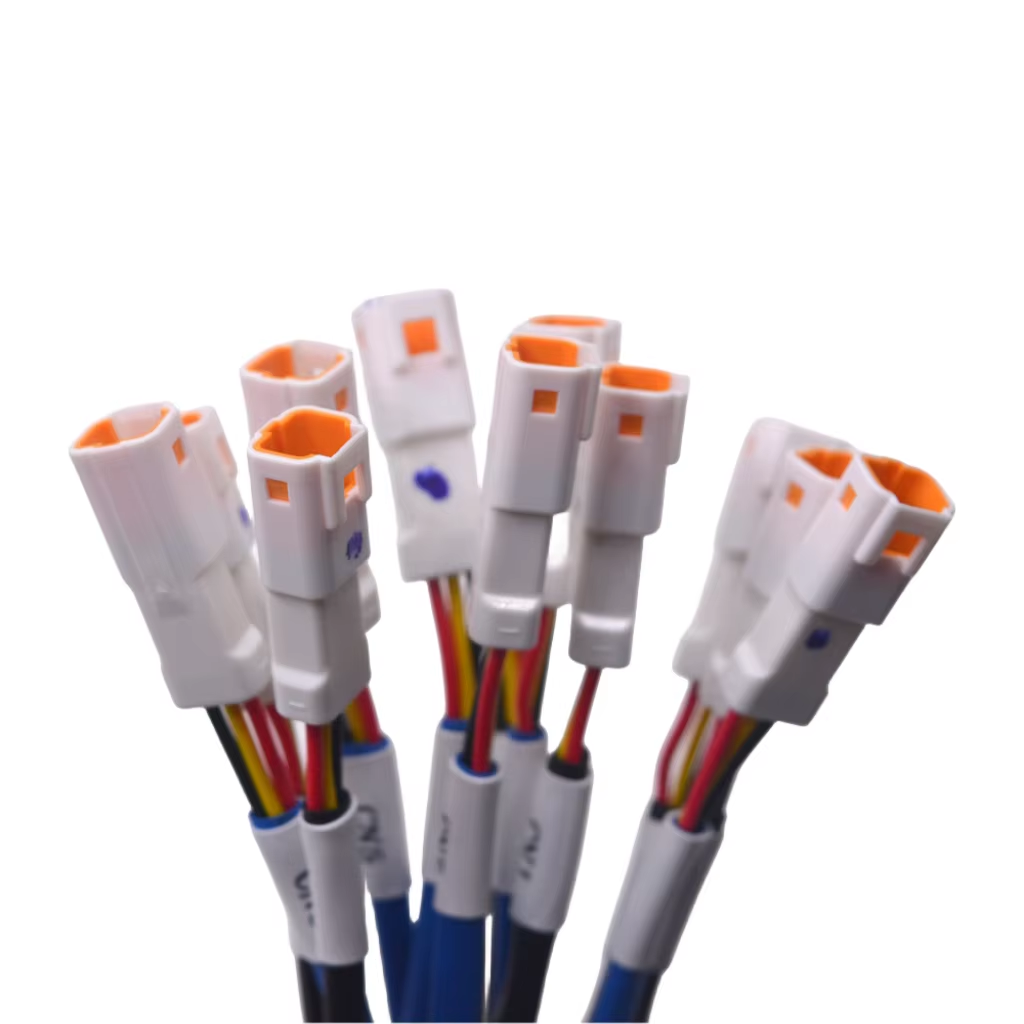
Connectors represent the primary mechanical and electrical touchpoints in any heavy-duty power routing system. In hybrid power configurations, connector failure can trigger system shutdown, loss of power steering, or safety hazards for maintenance technicians. A robust wiring harness for car hybrid power architectures incorporates High-Voltage Interlock Loops (HVIL). An HVIL is a low-voltage safety loop integrated directly into the high-voltage connector assembly that monitors connection continuity in real time; if a high-voltage connector begins to unlatch or disconnect during operation, the HVIL immediately triggers the main battery contactors to de-energize the high-voltage bus before exposure occurs. Additionally, connectors must feature IP67 or IP69K ingress protection ratings to prevent moisture, road salt, and dirt from compromising electrical contacts. Precision crimp terminations, strain-relief boots, and robust locking mechanisms guarantee stable electrical contact under constant vehicle vibration.
Production Quality Assurance and Traceability Standards
Achieving absolute reliability in hybrid automotive electronics demands rigorous testing, end-to-end traceability, and strict adherence to international automotive standards. Every customized wiring harness for car hybrid power deployment undergoes exhaustive quality verification, including high-potential (Hi-Pot) insulation resistance testing, low-resistance continuity checks, automated optical inspection (AOI), and mechanical pull-force testing on crimped terminals. Certifications such as IATF 16949, ISO 13485, UL, and compliance with RoHS and REACH regulations ensure that production processes maintain zero-defect standards from raw material receiving to final assembly. Complete component data traceability allows automotive OEMs and system integrators to trace every wire gauge, terminal batch, and assembly date back to its source, establishing full accountability and supporting long-term vehicle durability throughout the entire automotive lifecycle.